Mobility and IoT - and its impact on the semiconductor industry
Monday, April 28th, 2014I attended the Semicon 2014 last week here in Singapore at the Marina Bay Sands – after a self-imposed hiatus of a few years. I attribute the hiatus to Semi charging people to attend its industry tracks. I do realize that they too have to make a bit of money to sustain but then it is always tough to pay for an event once you get used to participating in them for free for some years! Anyhow, as I was chairing a session on the Fabless/IDM Technology Challenges track in this year’s event, I had free access to all its tracks and especially the market trends as well as the networking cocktail event held on the first day. The market trend has always been a big crowd puller for Semi and this year was no exception.
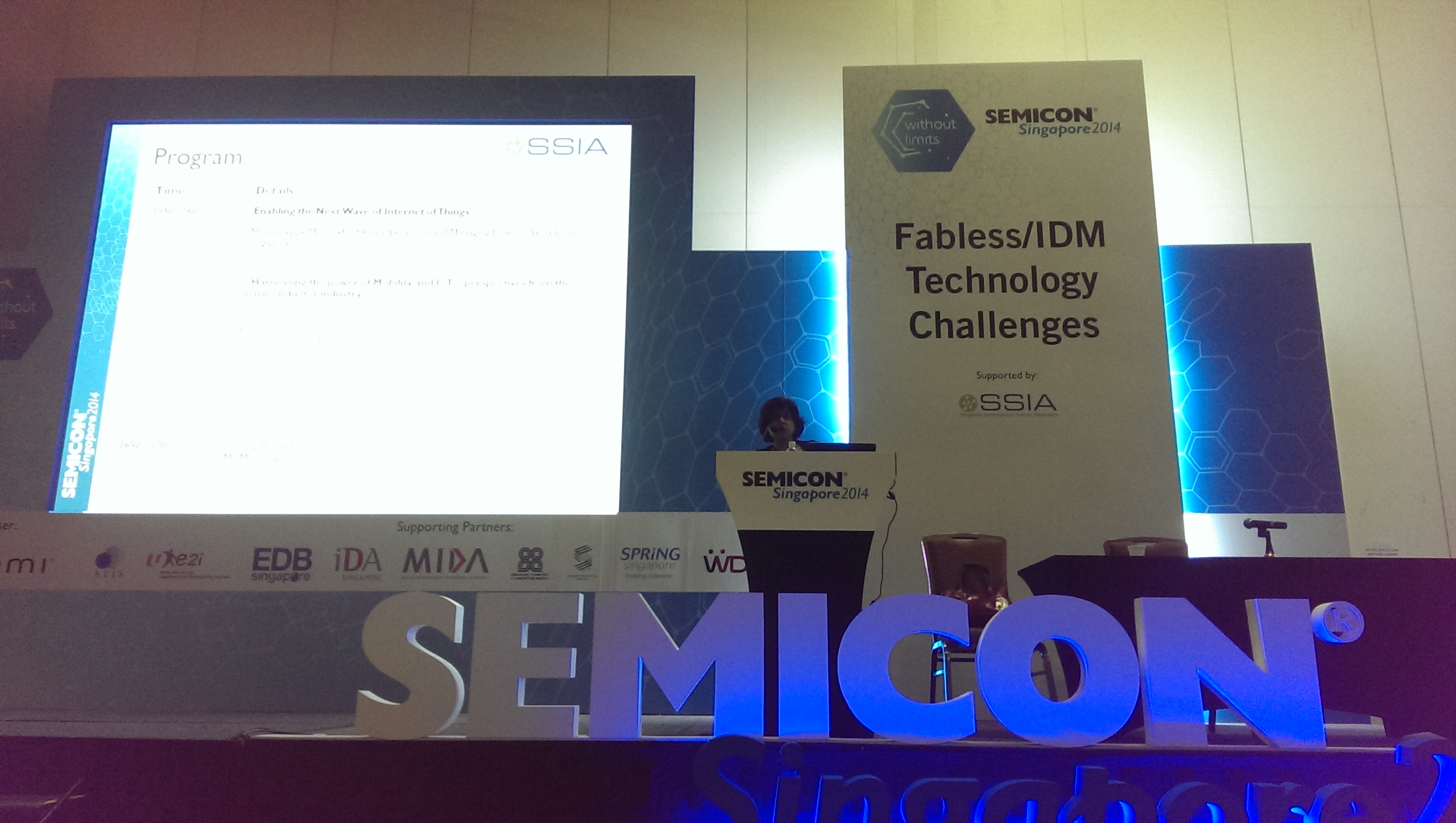
Anyhow, let me talk here about the Fabless/IDM track. This was co-organized by SSIA (Singapore Semiconductor Industry Association) of which I happen to be an executive committee member, along with Semi.
The theme of this track was “Mobility and IoT - and its impact on the semiconductor industry “. The growth has been quite rapid in this space especially now in the IoT one. The potential market is huge, is fragmented and with low barriers to entry and no major competitors/players (as yet) – a conducive backdrop on Porter’s five competitive forces shaping industry competition. Unlike the smartphone market which has evolved into a cut throat biz dominated by vertically integrated players, the IoT looks set to provide a refreshing levelling impetus.
We are looking into some exciting and innovating market opportunities in this space, especially on the IoT front. Apart from the potentially high growth applications markets that this opens up for the semiconductor industry, the underlying fabric of our industry is also seeing transformation at various levels including the increasing inter dependency and synergy across the various entities in this eco system. These emerging application markets and morphing industry ecosystem bring along several interesting visions and opportunities as well as new challenges. So it was with a lot of excitement and quest for knowing more on this aspect that I was looking forward to chairing this session and especially more to moderating the panel discussion following the presentations. And of course, the great speakers and the panellist line-up fuelled this up.
The speakers included Vincent Tong, SVP, New Product Introductions and Worldwide Quality & Asia Pacific Executive Leader, Xilinx, Greg Turetzky, Strategic Business Development Manager, Wireless Communication Systems Group, Intel, Jennifer Teo, VP of Manufacturing and GM, Silicon Labs International and Giuseppe Miano, VP Asia Operations and MD, Broadcom, Singapore. Vincent’s talk dwelled on IoT requiring advanced SoC with differentiation as a key i.e. differentiation with intelligence and flexibility and hence programmability. Greg spoke about ubiquitous location for all mobile platforms, the opportunities and the challenges. The market opportunities have expanded from GPS to GNSS and now to location with the latter being the next big opportunity – always located and with context. Jennifer talked about how IoT is being a game changer and dwelt on the technologies required for the “thingsâ€. Giuseppe spoke about the 3rd wave of wireless connectivity – from connecting to consumption to sensing (and controlling). Have added another acronym to my vocab – BYOW (Bring your own wearable) – and must say I find that cool! He also spoke about the favourable market dynamics driving the growth as well as the aspects that need to start being considered especially on the manufacturing, logistics and suppliers side.
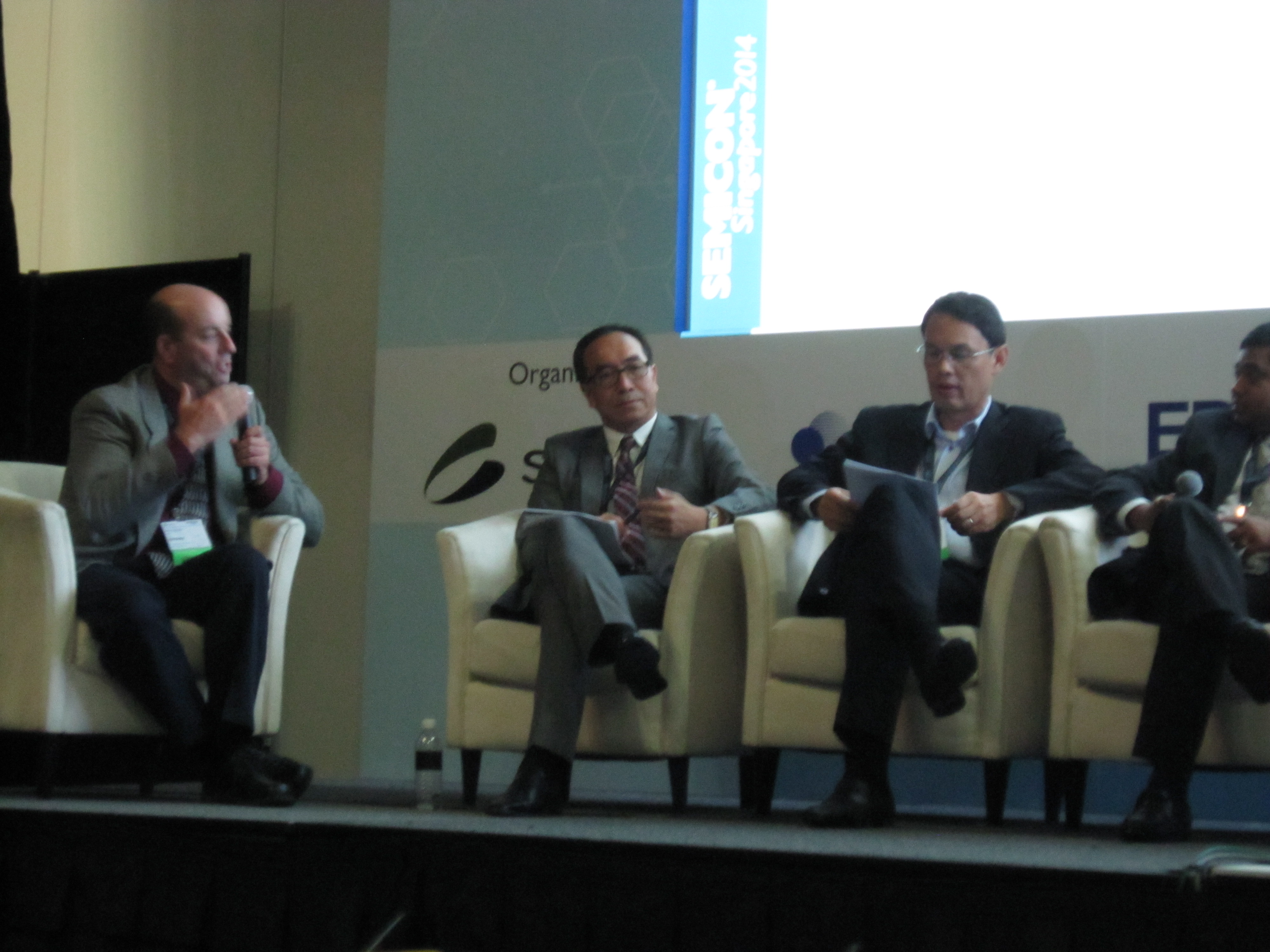
The panel discussion following these talks centred on “Harnessing the power of Mobility and IoT – perspectives from the semiconductor industryâ€. The panellists included the earlier speakers and
Subramani Kengeri, VP, Advanced Technology Architecture, GlobalFoundries and Francis Puno, Chairman SEA Work Group of Continua Health Alliance.
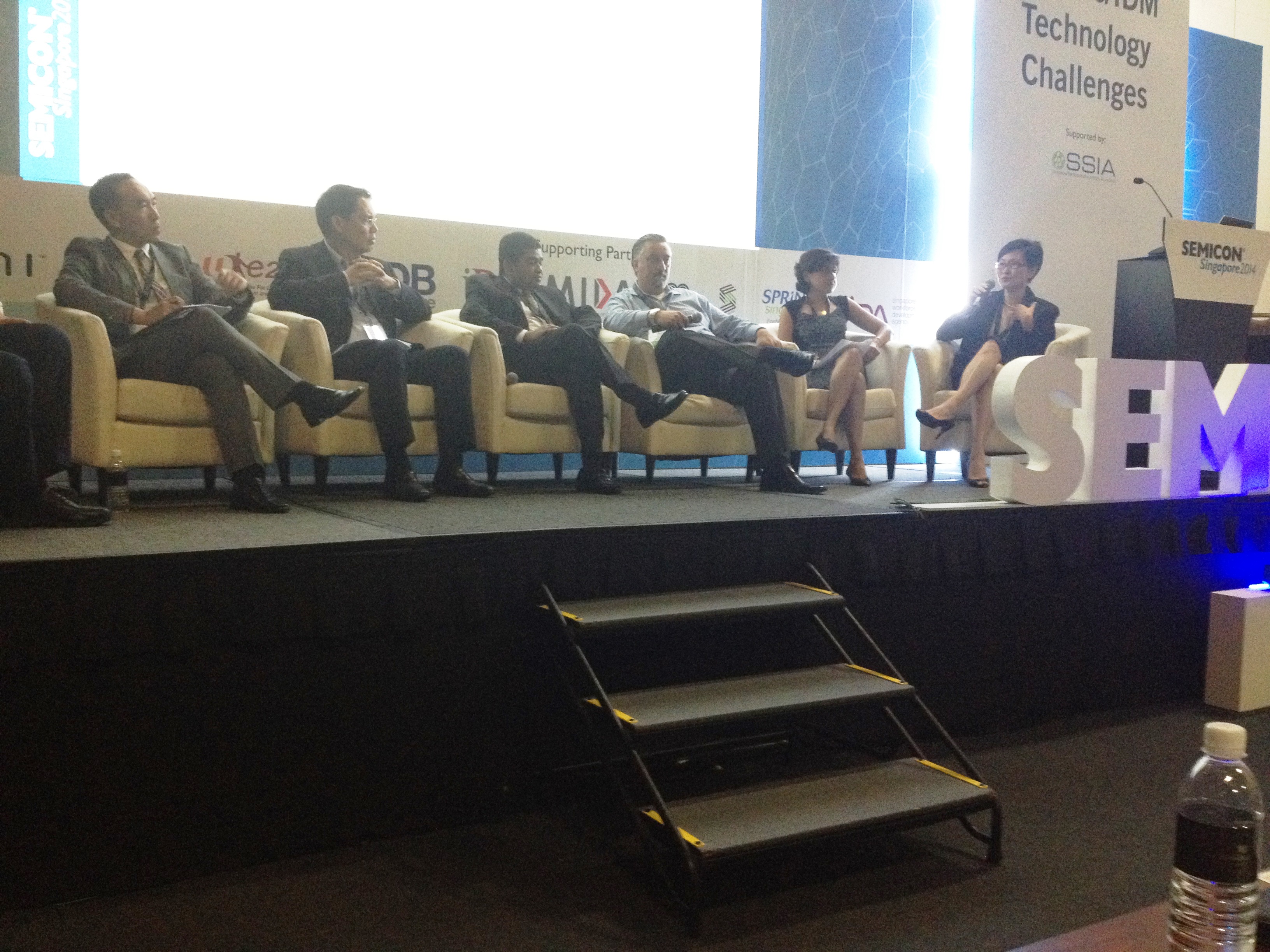
With stake holders from across the value-chain – IDM, fabless, foundry, application – the panel stirred up a lively and insightful debate. While the insights were quite forthcoming on my questions regarding the technical and even the ecosystem enablers, there was almost a conspiratorial silence from the panel on my query about the biz models they anticipated to develop or emerge with IoT applications. As they said, everyone is holding their cards close to their chest!
It was an insightful and a highly engaging session where all the speakers and panelists spoke passionately about this industry. And that is always heartening!